Sunscreen for hiking should be labeled broad spectrum, SPF 30 or higher and water resistant, the three things the American Academy of Dermatology recommends for everyone. Put it on 15 minutes before you set off, then reapply after 40 or 80 minutes of swimming or sweating (your label says which), immediately after towel drying and at least every 2 hours: the directions the FDA's sunscreen labeling rule, 21 CFR 201.327, requires on a water-resistant sunscreen. The SPF 30 floor is the Academy's; the timings are the label's.
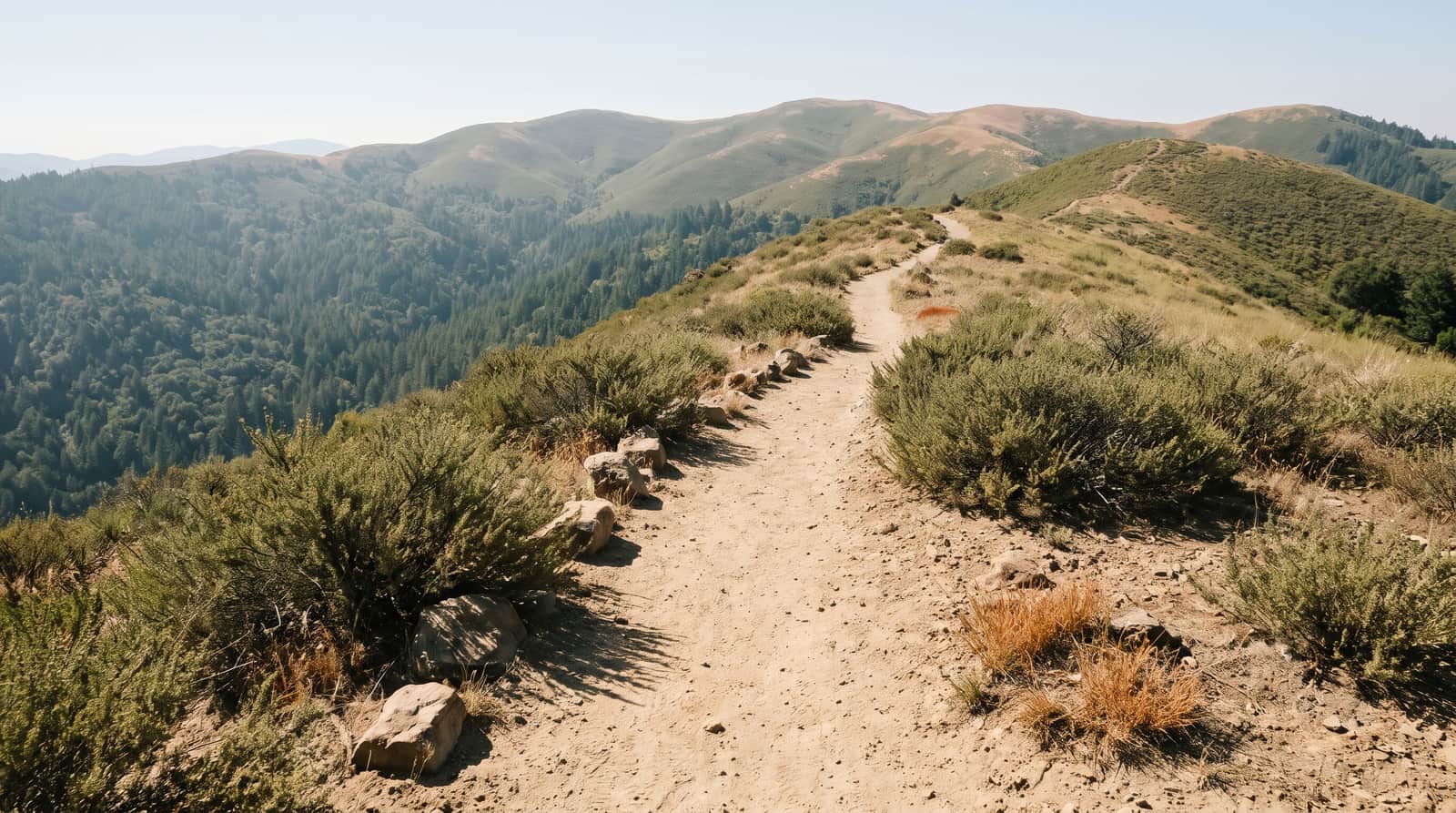
A hike is hours of sun in one stretch, often through the part of the day the FDA singles out, "between the hours of 10 a.m. and 2 p.m., when the sun's rays are most intense." Your ears, your nose, the back of your neck and the backs of your hands stay uncovered the whole way, and a trail climbs out of the trees, crosses open ground or stops at a lake.
This page is about sunscreen for hiking and backpacking on US labels: the words to look for, putting it on, reapplying on the trail, a swim along the way, carrying it on a multi-day trip, a higher trail, and what to wear with it. The same label words apply to any sunscreen for outdoor activities. It does not rank products, and the directions on your own sunscreen govern.
What is the best sunscreen for hiking?
The one whose label shows three things: broad spectrum, SPF 30 or higher, and water resistance. We do not rank brands. Those are the three the American Academy of Dermatology (AAD) recommends, and each has set wording on a US label:
- Broad Spectrum. The front panel reads "Broad Spectrum SPF" followed by the number (201.327(a)(1)(i)(A)). The FDA explains why the words matter: "Broad spectrum sunscreens help protect against both forms of UV radiation - UVA and UVB. However, not all sunscreens are broad spectrum, so it is important to look for this description on the label."
- SPF 30 or higher. SPF, the sun protection factor, is the number on the front. The floor of 30 is the AAD's: it "recommends that you select a sunscreen with an SPF rating of 30 or higher."
- Water Resistant (40 minutes) or Water Resistant (80 minutes). These are the only two water-resistance statements the rule allows on the front panel (201.327(a)(2)), so the label tells you which one you have. See which water claims a sunscreen label may make.
Those three label checks are what to look for in a sunscreen for hiking. Asked what type of sunscreen to use, the AAD answers: "The best type of sunscreen is the one you will use again and again." Sunscreen comes in many forms; the AAD lists "lotions, creams, gels, ointments, wax sticks, and sprays."
To tell what type of sunscreen it is, read the Active ingredient line in the Drug Facts box. In the AAD's words, "If the active ingredient in your sunscreen is titanium dioxide, zinc oxide, or both, you have a physical sunscreen," which is often called a mineral sunscreen.
Why is it important to use sunscreen while hiking?
Because a hike keeps the same skin in the sun for hours, often through midday, and the sun's ultraviolet (UV) rays still reach you under cloud.
What sunscreen does is printed on its label. The Uses line the rule requires says it "helps prevent sunburn" (201.327(c)(1)), and a broad spectrum sunscreen with SPF 15 or higher may add that, "if used as directed with other sun protection measures," it "decreases the risk of skin cancer and early skin aging caused by the sun" (201.327(c)(2)). The other measures are in what else protects your skin on the trail.
Midday is the strongest stretch. The EPA's check needs no watch: "If your shadow is shorter than you are (around midday), you are being exposed to higher levels of UV radiation."
Cloud does not switch the sun off. According to the AAD, "Even on cloudy days, up to 80% of the sun's harmful UV rays can penetrate the clouds." The World Health Organization's fact sheet on ultraviolet radiation (UVR) agrees: "UVR levels are highest under cloudless skies but can be high even with cloud cover."
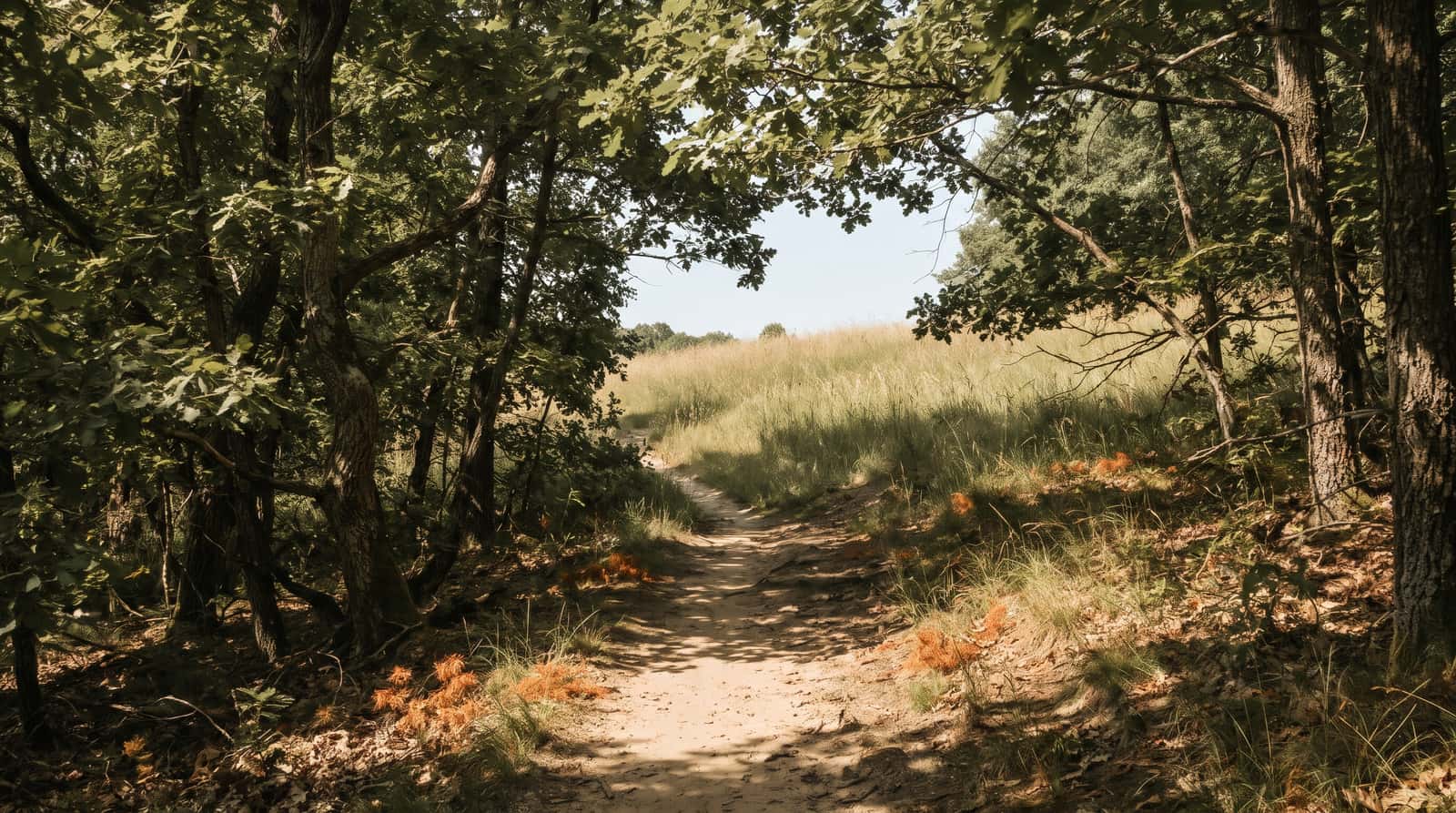
Shade comes and goes on a trail, and the AAD pairs it with sunscreen: "it's important to seek shade and apply a broad-spectrum, water-resistant sunscreen with an SPF of 30 or higher to all skin not covered by clothing." A forest path opens onto meadows, ridges and lakeshores, and those stretches are in full sun.
How should you put on sunscreen before a hike?
On dry skin, 15 minutes before you start walking, on all skin your clothes leave bare.
- Dry skin, 15 minutes before. The AAD says: "Apply sunscreen to dry skin 15 minutes before going outdoors." The FDA gives the reason for the wait: "Apply 15 minutes before sun exposure. This allows the sunscreen to have enough time to provide the maximum benefit."
- Liberally. Labels tell you to apply "liberally" or "generously" (201.327(e)(1)(ii)), and the Academy notes that many people apply only 20 to 50 percent of the amount needed to reach the SPF on the label. The figures are in how much sunscreen to use.
- Face and body alike. The same three checks hold for face and body, and so does the AAD's direction: "Apply sunscreen to all skin not covered by clothing. Remember your neck, face, ears, tops of your feet, and legs." For the order to put it on, face first, see how to apply sunscreen to your whole body.
- The spots that get missed. The FDA's "Frequently forgotten spots" are the ears, nose, lips (use SPF lip balm), back of neck, hands, tops of feet, along the hairline, and exposed scalp (from balding or thinning hair). For the lips, the AAD advises "a lip balm with an SPF of at least 30."
- The spots a hike adds. The tops of the shoulders and the collarbones either side of the pack straps, the backs of the hands on trekking poles, the back of the neck below a cap, and the backs of the knees and calves below shorts. More in spots people miss.
- Then the pack, the hat and the sunglasses. Put them on last, so nothing covers a patch you meant to reach.
How often should I reapply sunscreen while hiking?
At least every 2 hours, and sooner if you swim, sweat or towel off: after the label's 40 or 80 minutes of swimming or sweating, or right after towel drying, whichever comes first. Those three lines are the reapply direction the rule requires on a water-resistant sunscreen (201.327(e)(3)). On the trail, they fall like this:
| On the trail | What to do | Label line |
|---|---|---|
| At the trailhead | Put it on 15 minutes before you start | “15 minutes before sun exposure” |
| Two hours since you last put it on, sweating or not | Reapply | “at least every 2 hours” |
| A long, sweaty climb | Reapply once the label's water-resistance time is up | “after 80 minutes of swimming or sweating” (40, on a 40-minute label) |
| Drying off with a towel, or wiping sweat with a bandana | Reapply | “immediately after towel drying” |
| Every day of a multi-day trip | The same lines, each day | Each line above |
A sunscreen with no water-resistance claim reads differently: "reapply at least every 2 hours" and "use a water resistant sunscreen if swimming or sweating" (201.327(e)(4)). Whichever label you have, the AAD's advice points back to it: "When outdoors, reapply sunscreen approximately every two hours, or after swimming or sweating, according to the directions on the bottle."
Two habits help: set a 2-hour reminder when you put it on, and reapply at a shaded break. For the general schedule, see reapplying after swimming or sweating and a reapply routine for a day outside. Trail runners will find the same lines set out by run length in when to reapply on a long run.
What if you swim in a lake or river on a hike?
After a swim, reapply as the label directs: immediately after towel drying, and once its 40 or 80 minutes of swimming or sweating are up.
The minutes on the front are a tested rating. The FDA explains: "Water resistance claims, for 40 or 80 minutes, tell you how much time you can expect to get the labeled SPF-level of protection while swimming or sweating." It adds: "Sunscreens labeled 'water resistant' must be tested and found to be water resistant according to the required test procedures."
The rule sets out that test in 201.327(i)(7). The labeled SPF is determined after 40 or 80 minutes of water immersion, done as 20-minute periods of moderate activity in the water with 15-minute rests out of it in between, and no toweling. That is two periods for a 40-minute claim and four for an 80-minute claim.
Being in the water gives little shelter from the sun: the WHO's guide to the UV index says "Water offers only minimal protection from UV radiation." If you swim in your shirt, change into a dry one afterwards; the AAD notes that "dry clothing offers more sun protection than wet clothing." Our water-resistance guide covers the 40- and 80-minute ratings and what sunscreen to use for swimming.
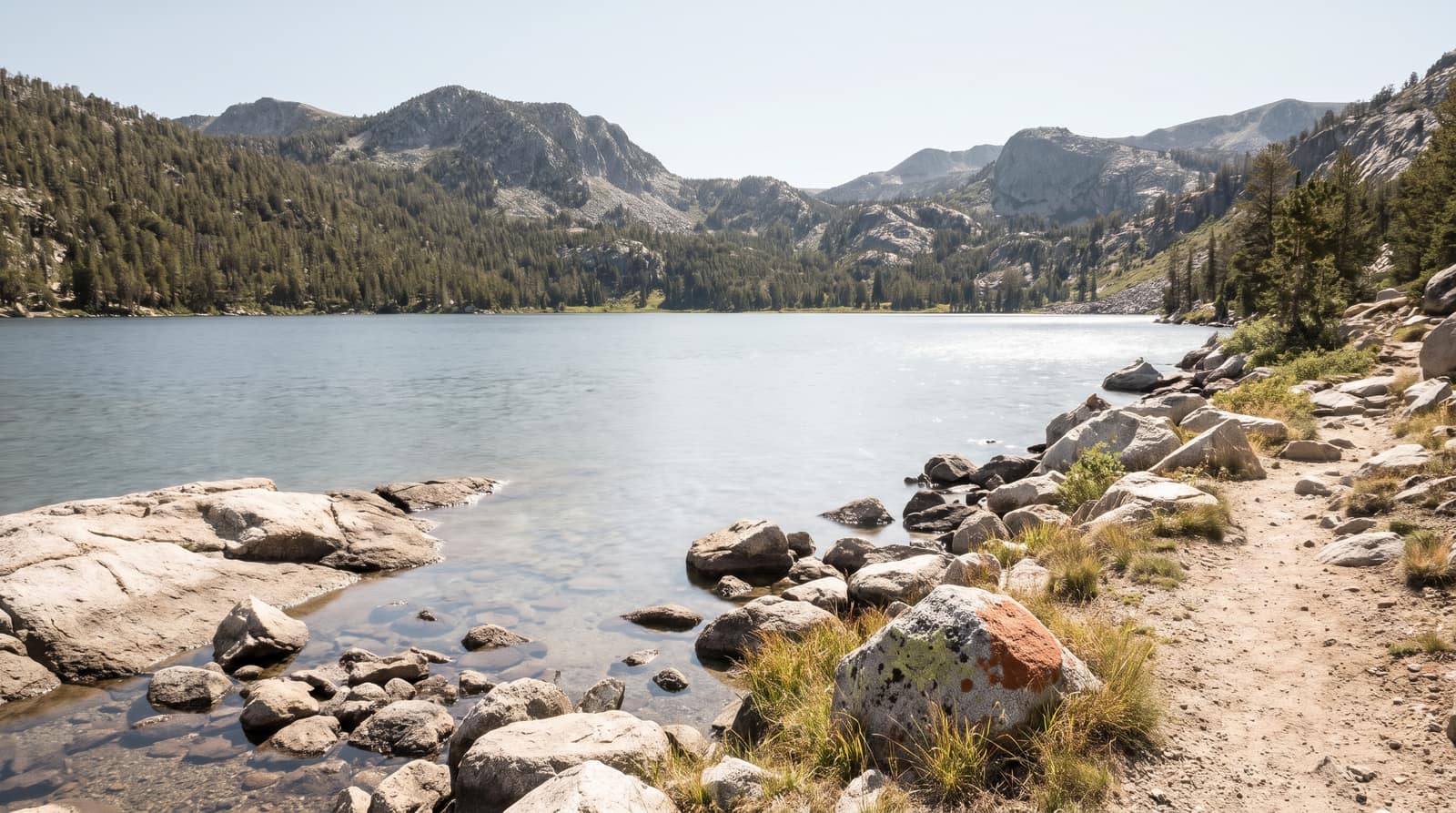
Sunscreen for backpacking: carrying it and packing out the empties
On a multi-day trip the routine is the label's, repeated every day.
- Each morning at camp, put it on 15 minutes before you start walking.
- On the trail, follow the three reapply lines in the table above.
- After a swim or a wash, put it on again right after you towel dry, or once the label's 40 or 80 minutes of swimming are up.
On a backpacking or camping trip, keep it where you can reach it without unpacking, such as a first-aid kit near the top of your pack. Sunscreen does not have to ride in a bottle: a small tube or a sealed single-use packet works too, with nothing to recap.
Empties go home with you. The Leave No Trace principle "Dispose of Waste Properly" begins "Pack it in, pack it out" and asks you to "Pack out all trash, leftover food and litter." Carry every empty tube or packet out with the rest of your trash.
Does UV get stronger as you climb?
Yes. The WHO's fact sheet explains: "UVR levels increase with altitude as the air is thinner and less UVR is absorbed." The three label words to look for in a sunscreen for hiking stay the same on a higher trail. The high, open part of a hike, such as a ridge above the trees or a summit, often has the least shade of the day, and that is where the hat, the sunglasses and the 2-hour reminder matter most.
What else protects your skin on the trail? Hat, sunglasses, clothing, UV index
A wide-brimmed hat, UV-blocking sunglasses and covering clothing, plus planning around midday. Sunscreen for hiking is one layer; these are the others.
- On the label. Under 201.327(e)(2), sunscreens rated Broad Spectrum SPF 15 or higher list "Sun Protection Measures" in their Directions, including "limit time in the sun, especially from 10 a.m.-2 p.m." and "wear long-sleeved shirts, pants, hats, and sunglasses."
- A hat with a wide brim. The AAD says to "choose one that has a wide brim, which will protect your ears, as well as your head and neck. Avoid baseball hats or straw hats with holes, as these are not as effective in protecting you outdoors."
- Sunglasses. The FDA advises: "Choose sunglasses with a UV400 rating or '100% UV protection' on the label."
- Clothing with a UPF number. The AAD says to "select clothing with an ultraviolet protection factor (UPF) number on the label."
- The UV index. The WHO says: "Sun protection is recommended when the ultraviolet index is 3 and above." The EPA adds: "The UV Index forecast is issued daily by the National Weather Service and EPA." Check it for the area you will hike in before you set off. What each reading asks of you is in the EPA's UV index bands.
- An early start. It puts more of the walk before midday.
The body-sunscreen guide covers these measures for the whole body in clothing and shade.
Where Solvyn Shield fits
Solvyn Shield, labeled Solvyn Mineral Sunscreen SPF 50, is a dermatologist-formulated mineral sunscreen, and zinc oxide, at 17.50%, is its only active ingredient. Its front panel states Broad Spectrum SPF 50 and Water Resistant (80 minutes), the longer of the two water-resistance ratings (see the label image).
Its Directions, as published on DailyMed (NDC 87777-948-00), include "Apply liberally 15 minutes before sun exposure and as needed" and "Reapply: after 80 minutes of swimming or sweating; immediately after towel drying; at least every 2 hours."
Rub it in and it disappears into your skin, with no white cast. It comes in sealed 5 mL single-use packets that are easy to carry in a first-aid kit. Every ingredient is listed on its Drug Facts label on DailyMed, and our ingredient guide walks through them.
See Solvyn Shield in sealed 5 mL single-use packets.
Sources
Regulation
- 21 CFR 201.327: Over-the-counter sunscreen drug products; required labeling based on effectiveness testing. Paragraphs (a)(1) and (a)(2), the front-panel claims; (c)(1) to (c)(3), the Uses line and its limits; (e)(1)(ii), (e)(2), (e)(3) and (e)(4), the Directions, Sun Protection Measures and reapply lines; (i)(7), the water-resistance test. eCFR.
FDA
- Sunscreen: How to Help Protect Your Skin from the Sun. The 10 a.m. to 2 p.m. advice, what broad spectrum means, the 15-minute direction and its reason, the frequently forgotten spots, and the water-resistance testing line. Content current as of 16 October 2026.
- Tips to Stay Safe in the Sun: From Sunscreen to Sunglasses. What the 40- and 80-minute claims tell you, and the sunglasses line. FDA Consumer Update, content current as of 10 September 2026.
American Academy of Dermatology
- Sunscreen FAQs. Broad spectrum, SPF 30 or higher and water resistance; the physical sunscreen line; the best type of sunscreen; the forms sunscreen comes in; cloudy days; dry skin 15 minutes before; the reapply line; the 20 to 50 percent note. Last updated 11 February 2025.
- How to apply sunscreen. All skin not covered by clothing, and the lip balm. Last updated 15 August 2025.
- What to wear to protect your skin from the sun. Shade with sunscreen, the wide-brimmed hat, dry and wet clothing, and the UPF number.
- How to select a sunscreen. The SPF 30 recommendation.
EPA
- Sun Safety Tips. The daily UV Index forecast. Last updated 27 January 2026.
- UV Index Scale. The shadow rule. Last updated 15 June 2026.
WHO
- Ultraviolet radiation. Altitude, cloud cover and the UV index threshold of 3. World Health Organization fact sheet, 21 June 2022.
- Global Solar UV Index: A Practical Guide. Water and reflections, from Table 3, "UV radiation danger: Facts and fiction" (page 14 of the PDF). World Health Organization, 2002.
Leave No Trace
- The Leave No Trace Seven Principles (poster). The principle "Dispose of Waste Properly". Leave No Trace Center for Outdoor Ethics.
Label
- Solvyn Mineral Sunscreen SPF 50: Drug Facts label on DailyMed. SPL set ID b0a8d028-87d2-4339-8879-c62cbf8415f2, NDC 87777-948-00, effective 15 June 2026: the active ingredient, the Directions quoted above and every inactive ingredient. U.S. National Library of Medicine.
- Label image (Label2.jpg). The principal display panel, which carries "Broad Spectrum SPF 50" and "Water Resistant (80 minutes)".
Brand record
- About Solvyn. The brand record behind "dermatologist-formulated".
All quoted text and figures above were read from these records on 2 November 2026.
A note on scope. This is general guidance on US sunscreen labels and public-health advice, not medical advice; follow the directions on your own sunscreen.
Solvyn makes Shield. Its full label is published on DailyMed and linked above, so you can check every ingredient yourself. We do not rank other sunscreens and there are no affiliate links on this page.