
For sensitive skin, the American Academy of Dermatology recommends a fragrance-free mineral sunscreen, one whose only active ingredients are zinc oxide, titanium dioxide or both. Like any sunscreen, it should also be broad spectrum, SPF 30 or higher and water resistant.
Packs can print “for sensitive skin” or “fragrance-free” on the front, but FDA says no federal standard or definition governs terms like these. What regulation does set is the Drug Facts panel, usually on the back, and the wording of the SPF, broad spectrum and water-resistance claims. Check the points above there. As with any new skin care product, patch-test a new sunscreen before using it every day.
This guide covers US labels and everyday sensitive skin. It is not medical advice: rosacea, eczema and damaged or broken skin need a board-certified dermatologist.
What is the best sunscreen for sensitive skin?
There is no single best sunscreen for sensitive skin, and no single best mineral sunscreen for sensitive skin either: the best one is the one you will wear, and the points below are what to check. The American Academy of Dermatology (AAD) puts it plainly: “The best type of sunscreen is the one you will use again and again.”
- Only mineral actives. Zinc oxide, titanium dioxide or both, and nothing else in the Active Ingredient line. The AAD calls this a physical, or mineral, sunscreen, and recommends it for people with sensitive skin.
- No fragrance. The AAD’s advice for sensitive skin is to avoid products with fragrance.
- No oils or PABA. The AAD’s label guide lists oils and PABA among the things a “sensitive skin” sunscreen often leaves out. The same AAD passage adds one more item, about allergy claims; the whole passage is quoted in What “sensitive skin” means on a label.
- No parabens or oxybenzone. Alongside oxybenzone, the AAD lists these to avoid: benzophenone-2, benzophenone-3, dioxybenzone, mexenone, sulisobenzone and sulisobenzone sodium.
- SPF 30 or higher. SPF, the sun protection factor, measures protection from UVB rays. The AAD gives everyone the same number: SPF 30 “blocks 97% of the sun’s UVB rays”, higher numbers block slightly more, and no sunscreen can block 100%.
- Broad spectrum. Protection against both UVA and UVB rays, which the AAD calls the aging rays and the burning rays.
- Water resistant. The AAD recommends it for everyone. The rating, 40 or 80 minutes, tells you when to reapply if you are swimming or sweating.
- The words “sensitive skin” on the label. The AAD suggests these too. What “sensitive skin” means on a label explains why, on their own, they settle nothing.
Is mineral sunscreen better for sensitive skin?
Yes, mineral sunscreen is what dermatologists recommend for sensitive skin. The AAD’s label guide says “Dermatologists recommend physical sunscreen, also called mineral sunscreen, for people with sensitive skin”. In its advice for people with rosacea, it describes a fragrance-free sunscreen with zinc oxide, titanium dioxide or both as “least likely to irritate your sensitive skin.”
In the AAD’s description, a mineral (physical) sunscreen forms a protective layer on the skin that absorbs the sun’s rays, as every sunscreen does, and also reflects them.
What does “sensitive skin” mean on a sunscreen label?
Nothing fixed: no federal rule defines the phrase on a sunscreen. The AAD’s guide to sunscreen labels says so, then describes what the phrase often signals when a manufacturer prints it:
This is the American Academy of Dermatology’s patient guidance, not a regulation. It describes what the phrase often means on a pack; it is not a standard, and no product is required to meet it.
Again, the FDA does not define the term “sensitive skin” for sunscreen. In general, if a sunscreen label says, "sensitive skin," it often means that the sunscreen:
Contains one or both of these active ingredients — titanium dioxide and zinc oxide
Does not contain fragrance, oils, PABA, or active ingredients found in chemical sunscreens, which can irritate sensitive skin
Is hypoallergenic
American Academy of Dermatology · read word for word on
FDA says the same of all three kinds of wording, “fragrance-free”, “for sensitive skin” and the allergy claim in the AAD’s last point: no federal standard or definition governs them. Read the ingredient list instead.
One related pair is worth separating. “Unscented” is not the same as “fragrance-free”: FDA notes that some products labeled “unscented” may still contain fragrance ingredients, and the AAD’s rosacea guidance says to choose fragrance-free rather than unscented. That difference has its own guide: what “fragrance-free” means on a sunscreen label.
How do you check a sunscreen’s Drug Facts label?
Read it section by section; each one answers part of the checklist. For the sunscreens it covers, including ones made with zinc oxide or titanium dioxide, a federal rule (21 CFR 201.327) fixes the wording of the Uses, Warnings and Directions and of the SPF, broad spectrum and water-resistance claims. What differs most from product to product is the ingredient lists.
| Panel section | What it tells you | What to look for if your skin is sensitive |
|---|---|---|
| Active ingredient(s) | Each UV filter and its percentage. | Only zinc oxide, titanium dioxide or both means a mineral (physical) sunscreen. Any other active listed means a chemical or hybrid formula; the AAD calls a formula with actives from both groups a hybrid. |
| Uses | What the product is labeled to do. Sunscreens covered by the rule must say “helps prevent sunburn”. Some labels add “if used as directed with other sun protection measures”, then “decreases the risk of skin cancer and early skin aging caused by the sun”, a line allowed only on Broad Spectrum products of SPF 15 or higher. | Nothing specific to sensitive skin. |
| Broad Spectrum SPF (front panel) | “Broad Spectrum” means the product passed a defined lab test of how far its protection reaches into UVA (a mean critical wavelength of 370 nm or greater, under 21 CFR 201.327(j)). | “Broad Spectrum” and SPF 30 or higher, together. |
| Water resistance (front panel) | A water-resistance claim takes one of two forms: “Water Resistant (40 minutes)” or “Water Resistant (80 minutes)”. “Sunblock”, “sweatproof” and “waterproof” are not allowed; the regulation calls a product that uses them misbranded. | One of the two wordings. The AAD recommends water resistance for everyone. |
| Warnings | Sunscreens covered by the rule carry “Do not use on damaged or broken skin”, “keep out of eyes. Rinse with water to remove.” and a “Stop use and ask a doctor if…” line about rash. | The rash line is the one to remember with any new product. |
| Directions | When to apply (15 minutes before sun exposure), when to reapply, and “children under 6 months of age: Ask a doctor”. | The same for mineral and chemical formulas. Follow the reapplication line on the pack. |
| Inactive ingredients | Everything else in the formula. | Where fragrance, parfum, parabens and botanical extracts show up. Read the whole list. |
What should you know before switching to mineral sunscreen?
Three practical tips: confirm it is mineral, read the inactive list, and reapply as directed.
- Confirm it is mineral on the Active Ingredient line. Zinc oxide, titanium dioxide or both, and nothing else, means a mineral (physical) sunscreen.
- Read the inactive list for fragrance. FDA says fragrance ingredients can be listed simply as “Fragrance”, so look for that word first. The AAD adds that products with plant-based botanical ingredients “may still have fragrance-related ingredients.”
- Reapply as directed, like any sunscreen. The label’s Directions give the schedule; see how often.
Why does sunscreen sting, and what about near the eyes?
Often it is an ingredient your skin does not tolerate. If sunscreen stings or burns, the AAD’s advice is to switch to one whose only actives are zinc oxide, titanium dioxide or both, and to avoid fragrance.
If you can’t tell what is causing a reaction, a board-certified dermatologist can run a medical patch test, which goes further than the at-home test below.
Near the eyes, the Warnings section already says it: “keep out of eyes. Rinse with water to remove.” The AAD suggests a sunscreen stick around the eyes to keep sunscreen from dripping into them.
How do you patch-test a new sunscreen?
Follow the AAD’s general method for testing a new skin care product:
- Choose a quarter-sized spot where the product won’t be rubbed or washed away, such as the underside of your arm or the bend of your elbow.
- Use the normal amount and thickness you would use every day, and leave it on for as long as you normally would.
- Apply it to that spot twice a day for seven to 10 days.
- If you have no reaction, such as red, itchy or swollen skin, go ahead and use the product.
- If you do react, gently wash it off as soon as possible and don’t use it again. If the reaction is severe and does not settle, the AAD says you may need to see a dermatologist.
It is worth doing with any new formula: the AAD cautions that “unscented” and botanical products may still carry fragrance-related ingredients, and those sit in the inactive list. Testing “can help predict” a reaction, the AAD says; it does not promise that none will happen.
If a rash or irritation shows up later, in everyday use, stop and follow the label’s own “Stop use and ask a doctor if…” line.
How much sunscreen, how early and how often?
Apply liberally 15 minutes before sun, and again at least every 2 hours, or sooner after swimming, sweating or towel drying.
- How much. A sunscreen label’s Directions read “Apply liberally 15 minutes before sun exposure”.
- How early. The AAD says to apply sunscreen “to dry skin 15 minutes before going outdoors”.
- How often. A water-resistant label’s Directions read: reapply “after 80 minutes of swimming or sweating” (or 40, depending on its rating), “immediately after towel drying” and “at least every 2 hours”.
- A higher SPF is not a longer day. The AAD says “A high-number SPF does not allow you to spend additional time outdoors without reapplication.”
- Babies. Labels say “children under 6 months of age: ask a doctor”. FDA’s advice is to “check with your pediatrician before applying sunscreen to children younger than 6 months.”

What’s in Solvyn Shield
Solvyn Shield is the mineral sunscreen we make. Its only active ingredient is zinc oxide, at 17.50%. It is dermatologist-formulated, and Dr. Eduardo Weiss, MD, a board-certified dermatologist, leads Solvyn’s medical advisory board.
Its label states Broad Spectrum SPF 50 and Water Resistant (80 minutes), the longer of the two water-resistance ratings. Its ingredient list has no fragrance, parfum, parabens, oxybenzone or PABA, and no chemical-sunscreen actives.
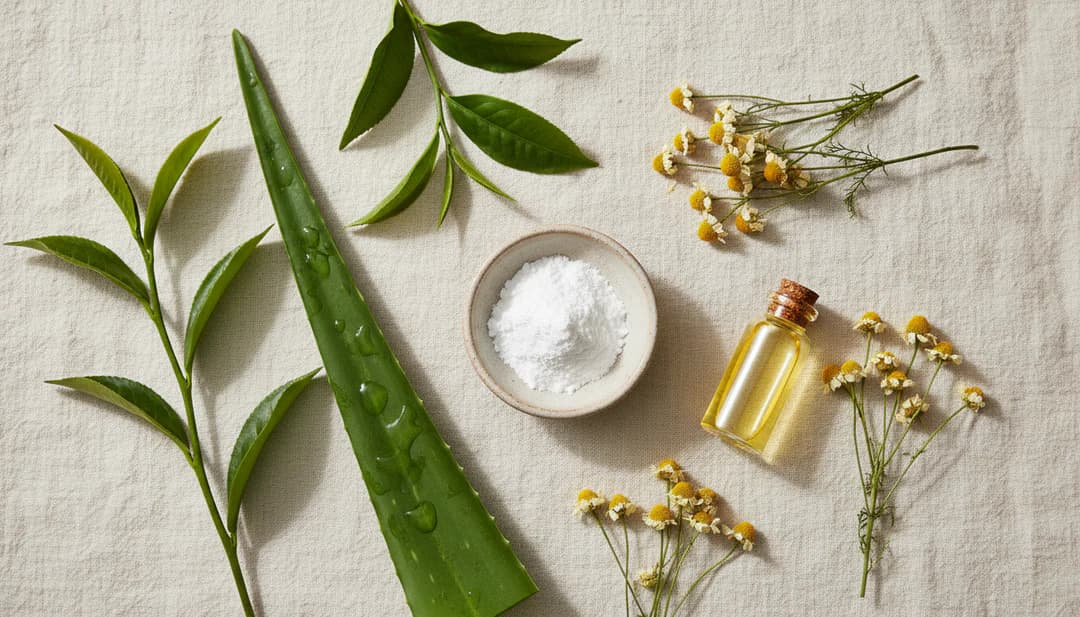
The formula also includes Aloe Barbadensis Leaf Juice, Butyrospermum Parkii (Shea) Butter, plant oils such as Cocos Nucifera (Coconut) Oil and Persea Gratissima (Avocado) Oil, and plant extracts such as Camellia Sinensis (Green Tea) Leaf Extract.
Every ingredient is on its label on DailyMed, where Shield is listed as Solvyn Mineral Sunscreen SPF 50 (NDC 87777-948-00). All 30 inactive ones are in the Inactive Ingredients section of its Drug Facts.
The one “alcohol” on the list is Cetearyl Alcohol; ethyl alcohol is not on it. FDA’s page on “alcohol free” labeling explains that in cosmetic labeling “alcohol” on its own means ethyl alcohol, and that cetearyl alcohol is one of the fatty alcohols, whose “effects on the skin are quite different from those of ethyl alcohol.”
If a zinc oxide–only SPF 50 is what you are looking for, Solvyn Shield comes in sealed 5 mL single-use packets, so each use starts with a freshly opened packet and there is no shared bottle or jar. As with any new sunscreen, try it on a small patch first.
How to check any sunscreen’s full label yourself
Search the product on DailyMed, the National Library of Medicine’s database of drug labels, and read the label there rather than only on the manufacturer’s own pages. Ours is the Solvyn Mineral Sunscreen SPF 50 label published on DailyMed, including the front-panel image.
Our ingredient and application guide lists the same 30 inactive ingredients. Read any sunscreen you are considering this way, against the checklist above.
Primary sources
The product label
- Solvyn Mineral Sunscreen SPF 50, SPL b0a8d028-87d2-4339-8879-c62cbf8415f2 — the Drug Facts label, the full inactive ingredient list and the principal display panel image (Label2.jpg), which carries the “Broad Spectrum SPF 50” and “Water Resistant (80 minutes)” statements. NDC 87777-948-00, labeler Solvyn Skin LLC, label information updated 15 June 2026. DailyMed, U.S. National Library of Medicine.
Federal regulation
- 21 CFR 201.327 — Over-the-counter sunscreen drug products; required labeling based on effectiveness testing — the required Uses, Warnings and Directions statements, the two water-resistance statements, the misbranding of “sunblock”, “sweatproof” and “waterproof” in paragraph (g), and the 370 nm broad spectrum test in paragraph (j). eCFR, displayed as up to date as of 22 September 2026. It applies to sunscreens containing zinc oxide, titanium dioxide or 14 other listed actives, not to those marketed under approved new drug applications or abbreviated new drug applications.
- 21 CFR 201.66 — Format and content requirements for over-the-counter (OTC) drug product labeling — the Drug Facts headings and the inactive-ingredient listing in paragraph (c)(8). eCFR, up to date as of 22 September 2026.
Agency guidance
- Allergens in Cosmetics — FDA, content current as of 9 October 2026 (re-read 11 October 2026; the cited sentence is unchanged). No federal standard or definition governs front-of-pack terms such as “fragrance-free” or “for sensitive skin”.
- Fragrances in Cosmetics — FDA, content current as of 28 February 2022. “Unscented” products may contain fragrance ingredients, and fragrance ingredients can be listed simply as “Fragrance”.
- “Alcohol Free” — FDA, content current as of 25 February 2022. What “alcohol” means in cosmetic labeling, and fatty alcohols.
- Should You Put Sunscreen on Infants? Not Usually — FDA consumer update, content current as of 10 September 2026.
Medical societies
- How to decode a sunscreen label — American Academy of Dermatology, last updated 21 September 2026. The “sensitive skin” passage quoted above, SPF, UVA and UVB, water resistance, and physical, chemical and hybrid sunscreens.
- How do I know if I’m using the right sunscreen? — American Academy of Dermatology, last updated 25 April 2024. Advice for sensitive skin, stinging and around the eyes.
- Sunscreen FAQs — American Academy of Dermatology, last updated 11 February 2025. “The best type of sunscreen is the one you will use again and again”, timing, reapplication, SPF 30 and 97% of UVB, and why a higher SPF does not mean more time outdoors.
- How to test skin care products — American Academy of Dermatology, last updated 10 August 2021. The at-home test method, the caution on “unscented” and botanical products, and dermatologist patch testing when the cause is unclear.
- How to prevent rosacea flare-ups — American Academy of Dermatology. The “least likely to irritate” passage.
- 7 rosacea skin care tips dermatologists recommend — American Academy of Dermatology, last updated 3 April 2024. Fragrance-free rather than unscented.
All quoted text was read from these records on 24 September 2026.
A note on scope. This guide covers United States sunscreen labels and reflects sources read on 24 September 2026. It is not medical advice. If you have a skin condition, including rosacea or eczema, or skin that is damaged or broken, see a board-certified dermatologist before choosing a sunscreen.
Solvyn makes Shield. Its full label is published on DailyMed and linked above, so you can check every ingredient yourself. You can see Solvyn Shield on the shop page.